Generative AI in Healthcare: Applications, Benefits, Risks & Future
Introduction to Generative AI in Healthcare
- Generative AI is emerging as one of the most transformative technologies in modern healthcare, offering capabilities that extend far beyond conventional data analysis. These advanced models can interpret complex datasets, create medical insights, simulate treatment outcomes, and even generate diagnostic-quality images.
- With the rapid shift toward digital healthcare, Generative AI has become a core driver of innovation. Hospitals, clinics, and research institutions use it to enhance diagnostics, speed up workflows, strengthen decision-making, and reduce administrative burdens.
- Its strength lies in its ability to identify patterns in massive datasets, detect anomalies with precision, and produce meaningful outputs that support safer and more personalized care. As the healthcare landscape evolves, Generative AI will continue to shape smarter, more efficient systems worldwide.
➡️ Why Healthcare Is Rapidly Adopting Generative AI
Healthcare organizations are accelerating the adoption of Generative AI in response to rising patient volumes, complex medical data, workforce shortages, and the need for faster, error-free diagnostics. Generative AI helps bridge these gaps through intelligent automation, real-time insights, and predictive modeling.
Healthcare providers are using Generative AI to:
- ▶️ Detect diseases earlier and with higher accuracy
- ▶️ Minimize diagnostic errors using AI-powered image analysis
- ▶️ Accelerate drug discovery and research through simulation-based testing
- ▶️ Automate repetitive tasks like documentation and reporting
- ▶️ Deliver personalized treatment plans tailored to individual patients
As value-based care models grow worldwide, hospitals are adopting technologies that enhance efficiency and improve patient outcomes. Generative AI perfectly aligns with this need, making it a cornerstone of modern healthcare transformation.
➡️ Growing Demand for Intelligent Healthcare Systems
The need for intelligent healthcare systems has increased dramatically due to rising patient expectations for faster, more personalized, and more accessible care. Traditional systems often struggle to manage large volumes of health data generated from EHRs, medical imaging, wearables, and remote monitoring devices.
Generative AI supports intelligent healthcare ecosystems by:
- ▶️ Instantly analyzing large datasets for clinical insights
- ▶️ Predicting patient health trends to enable proactive care
- ▶️ Generating automated clinical summaries, reducing paperwork
- ▶️ Enhancing communication through AI-driven virtual assistants
- ▶️ Powering telehealth and remote monitoring workflows
These capabilities allow hospitals to operate more efficiently, reduce treatment delays, and offer customized healthcare experiences. As the industry moves toward automated, personalized, and long-term preventive care, AI-driven systems will become essential components of future healthcare infrastructure.
Key Applications of Generative AI in Healthcare
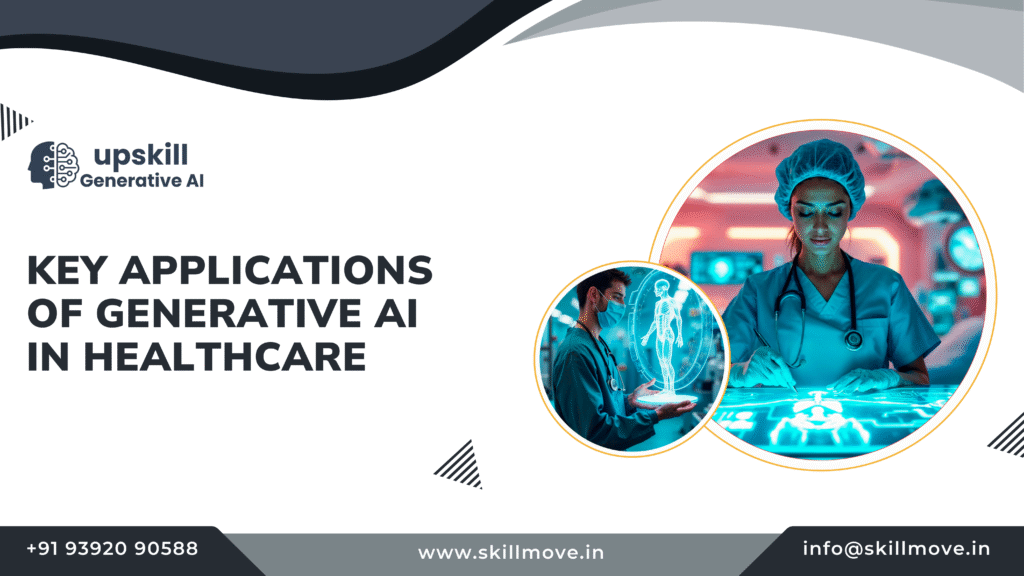
Generative AI is reshaping the healthcare ecosystem by assisting clinicians, researchers, and administrators in ways that were previously time-consuming or impossible. Unlike traditional AI, which only classifies or predicts outcomes, generative models can create new data, simulate medical scenarios, and support complex decision-making. These capabilities make Generative AI a powerful tool across diagnostics, drug discovery, patient interaction, and operational workflows.
Below are the major real-world applications where Generative AI is creating measurable impact.
Generative AI is revolutionizing medical imaging by improving diagnostic accuracy and reducing the workload on radiologists. These models can analyze X-rays, MRIs, CT scans, and ultrasound images to detect patterns that might be overlooked by humans.
Key Advantages
- Detecting early-stage tumors, fractures, lung issues, and neurological conditions
- Enhancing low-quality or incomplete images
- Reconstructing missing parts of scans
- Reducing noise in MRI scans without extending scan duration
Example:
Generative models improve MRI clarity using noise-reduction algorithms, allowing clinicians to diagnose conditions faster and with greater confidence.
➡️ Clinical Decision Support Systems
Clinical Decision Support Systems (CDSS) use Generative AI to help healthcare professionals make accurate, evidence-based decisions. By analyzing patient histories, lab reports, and EHR data, AI can suggest diagnoses, highlight risks, and recommend treatment options aligned with medical guidelines.
How It Helps
- Assists doctors in evaluating symptoms
- Predicts complications in high-risk patients
- Recommends personalized care pathways
These systems act as a second layer of support—not a replacement for clinicians—reducing errors and improving treatment outcomes. Many hospitals now integrate CDSS tools into EHR platforms to streamline clinical workflows.
➡️ AI-Driven Drug Discovery & Development
Drug discovery is traditionally expensive, slow, and labor-intensive. Generative AI accelerates this process by predicting molecular structures, simulating drug interactions, and generating candidate compounds in hours rather than months.
Applications
- Screening billions of compounds virtually
- Suggesting modifications to improve drug safety
- Identifying potential drug repurposing opportunities
Example:
During COVID-19, AI-assisted research helped scientists analyze virus structures and identify promising drug molecules far faster than conventional lab work.
➡️ Personalized Treatment Planning
Generative AI enables highly customized treatment plans based on each patient’s medical history, genetics, lifestyle, and predicted response to therapy.
Examples of Use
- Personalized chemotherapy combinations
- Tailored medication and lifestyle recommendations for chronic diseases
- Predictive simulation of treatment outcomes
These insights improve treatment adherence, reduce risks, and ensure that patients receive the most effective therapies for their specific needs.
➡️ Generative AI for Medical Data Augmentation
Healthcare AI systems require large, diverse datasets to perform well. However, real medical data is often limited due to privacy concerns or high annotation costs. Generative AI solves this by creating synthetic medical data that mimics real samples without exposing patient information.
Benefits
- Enables training of diagnostic models when datasets are small
- Reduces bias by balancing underrepresented classes
- Supports rare disease research by generating realistic examples
Synthetic data improves accuracy, diversity, and reliability in healthcare AI models.
➡️Patient Engagement & Virtual Assistants
Generative AI powers conversational tools such as virtual health assistants, chatbots, and automated triage systems. These tools help patients with:
- Appointment scheduling
- Medication reminders
- Basic symptom checks
- Telehealth support
- Post-treatment instructions
Hospitals use AI chatbots to manage high volumes of inquiries, improving response times and reducing strain on administrative staff. These tools enhance patient experience without replacing clinical guidance.
➡️ Streamlining Administrative & Operational Tasks
A significant portion of healthcare resources is spent on administrative work. Generative AI reduces this burden by automating routine tasks and converting unstructured data into usable formats.
Examples
- Automatically transcribing doctor–patient conversations
- Creating discharge summaries and clinical notes
- Preparing insurance claim documentation
- Optimizing staff schedules based on patient flow
By automating these processes, healthcare professionals can spend more time delivering direct patient care, while hospitals operate more efficiently and at lower cost.
The Impact of COVID-19 on Generative AI Adoption
- The COVID-19 pandemic accelerated digital transformation across nearly every sector, with healthcare experiencing the most dramatic shift. As health systems faced overwhelming patient loads, supply shortages, and urgent demands for timely decision-making, Generative AI emerged as a powerful tool capable of addressing critical challenges. The pandemic underscored the need for scalable, data-driven technologies, pushing organizations to adopt AI at a pace never seen before.
- Generative AI played a vital role in strengthening clinical workflows, supporting remote care delivery, analyzing vast medical datasets, and assisting researchers with outbreak modeling. Between 2020 and 2023, reports show a significant rise in AI adoption across hospitals, driven by the need for automation, predictive analytics, and enhanced digital support during the crisis.
- The sections below highlight the major areas where COVID-19 accelerated the adoption of Generative AI.
➡️ Accelerated Digital Healthcare Transformation
COVID-19 forced healthcare systems worldwide to transition rapidly toward digital-first care models. Lockdowns, reduced in-person visits, and the need to minimize physical contact prompted a surge in solutions that enabled safe, efficient, and remote healthcare delivery. Generative AI became central to this rapid digital shift.
1. Automation of Clinical Workflows
As clinicians struggled with heavy workloads, AI-powered tools helped automate repetitive tasks such as documentation, note summarization, and report generation. These solutions converted unstructured clinical data into clear summaries, reducing administrative burden and allowing healthcare professionals to devote more time to critical patient care.
2. AI-Enhanced Diagnostics and Imaging
The urgent need for rapid detection of COVID-19—especially lung-related complications—accelerated the use of AI in radiology. Generative AI models enhanced CT and X-ray scans, identified pneumonia patterns, reconstructed low-quality images, and supported radiologists in making faster, more accurate diagnoses.
3. Digital Health Integration
Hospitals integrated AI-driven tools into Electronic Health Record (EHR) systems to improve triage, consolidate patient histories, and streamline care coordination. This integration resulted in faster decision-making and more efficient management of patient data.
A 2021 HIMSS survey revealed that over 80% of healthcare organizations increased or planned to increase AI investments, largely due to gaps exposed during the pandemic.
➡️ Rise of Telemedicine & Remote Monitoring
Telemedicine experienced unprecedented adoption during the pandemic. With physical visits restricted, healthcare providers rapidly deployed virtual care platforms. Generative AI powered many of the features that made telehealth effective and accessible.
1. Growth Metrics and Adoption Trends
According to McKinsey, telehealth usage in the U.S. increased 38-fold compared to pre-pandemic levels. Similar adoption spikes occurred globally as countries promoted digital health services to prevent hospital overcrowding.
2. AI-Driven Virtual Assistants and Chatbots
Generative AI-powered chatbots became essential tools during the pandemic. They were widely used to:
- Conduct symptom assessments
- Provide basic medical advice
- Help patients book appointments
- Answer common COVID-19 queries
These AI assistants eased the pressure on helplines and improved accessibility to reliable information.
3. Remote Patient Monitoring (RPM)
Devices such as smart thermometers, pulse oximeters, and wearable sensors were integrated with AI systems to monitor patient vitals continuously. Generative AI analyzed these real-time data streams to:
- Detect early warning signs
- Predict patient deterioration
- Generate summary reports for clinicians
RPM proved especially valuable for high-risk patients who could not safely visit hospitals.
4. Continuity of Care
By combining telemedicine with AI-powered decision support, healthcare providers ensured ongoing care for chronic conditions, mental health management, and post-COVID follow-ups—despite physical restrictions.
➡️ Predictive Models for Outbreak Management
Predictive modeling became one of the most critical applications of AI during the pandemic. Generative AI enabled governments and healthcare institutions to better understand, anticipate, and respond to evolving outbreaks.
1. Infection Spread Forecasting
Researchers used generative models to simulate outbreak trajectories. These models predicted infection surges, ICU occupancy, and resource needs, enabling authorities to plan lockdowns, allocate supplies, and distribute vaccines more efficiently.
2. Early Detection of Hotspots
By analyzing mobility data, testing rates, and population behavior, AI systems identified emerging hotspots before outbreaks intensified. This allowed for targeted containment measures rather than broad, disruptive lockdowns.
3. Drug Repurposing and Treatment Modelling
Generative AI assisted researchers in identifying existing drugs with potential effectiveness against COVID-19. These models simulated molecular interactions and predicted therapeutic potential, significantly shortening the time required for early research.
4. Resource Optimization
Hospitals used AI-powered forecasting tools to manage ventilators, oxygen supplies, and staffing schedules. Predictive analytics ensured that resources were allocated where they were most needed, improving overall crisis response.
Reports from global health research organizations confirmed that AI-based predictive tools played a vital role in speeding up decision-making and improving the accuracy of outbreak management strategies.
Generative AI is reshaping healthcare by enabling faster decision-making, enhancing diagnostic accuracy, and improving patient outcomes. Its ability to analyze large volumes of data, learn from patterns, and generate meaningful insights empowers healthcare professionals to deliver more precise and efficient care. The following sections explore the major benefits of Generative AI across various healthcare domains.
➡️ Predictive Models for Outbreak Management
Generative AI significantly enhances diagnostic accuracy by assisting clinicians in interpreting medical data more efficiently and precisely.
How It Helps
- Advanced Medical Imaging:
Generative models can improve the clarity of MRI, CT, and X-ray images by reducing noise, filling missing information, or generating enhanced reconstructions. - Early Disease Detection:
AI algorithms can detect subtle patterns or anomalies—such as early-stage tumors or lung abnormalities—that may not be easily visible to the human eye. - Predictive Diagnostics:
By analyzing historical patient data, AI can predict the likelihood of developing conditions such as diabetes, cardiovascular disease, or neurological disorders.
Impact
More accurate diagnostics lead to earlier interventions, reduced misdiagnosis rates, and better patient outcomes—especially in areas like oncology, radiology, and cardiology.
➡️ Faster Drug Development Cycles
Drug discovery traditionally takes years of research, testing, and clinical trials. Generative AI helps reduce this timeline by automating several early-stage processes.
How It Helps
- Molecule Generation:
AI can generate thousands of potential drug compounds in hours, compared to months of laboratory screening. - Simulated Testing:
Generative models predict how a drug will interact with proteins, cells, or pathogens, allowing researchers to filter out ineffective candidates early. - Drug Repurposing:
AI can analyze existing medications and identify new therapeutic uses, speeding up development and reducing cost.
Impact
These capabilities accelerate the drug development pipeline, enabling faster discovery of treatments for conditions like cancer, rare diseases, and infectious diseases
➡️ Enhanced Patient Engagement
Generative AI also improves the patient experience by making communication more accessible, personalized, and efficient.
How It Helps
- AI-Driven Virtual Assistants:
Patients can interact with chatbots for appointment scheduling, medication reminders, and basic health guidance. - Personalized Health Education:
AI generates simplified explanations of medical reports, treatment plans, and symptom management instructions. - Continuous Interaction:
Tools like conversational AI ensure patients stay engaged between visits, improving adherence to care plans.
Impact
Improved engagement leads to increased patient satisfaction, better self-management of chronic illnesses, and stronger doctor–patient relationships.
➡️ Increased Operational Efficiency
Healthcare providers deal with immense administrative workloads, which can divert attention from patient care. Generative AI helps streamline and automate many of these tasks.
How It Helps
- Automated Documentation:
AI can generate clinical summaries, transcribe consultations, and organize patient notes. - Optimized Resource Allocation:
Predictive models help hospitals manage bed allocation, staffing, and appointment scheduling. - Faster Claims Processing:
Generative models can assist in preparing insurance claim documents and verifying patient information.
Impact
Hospitals operate more efficiently, reduce manual errors, shorten patient wait times, and lower operating costs.
➡️Advancements in Personalized Medicine
Generative AI enables highly tailored treatments by analyzing each patient’s unique health profile.
How It Helps
- Treatment Simulation:
AI can simulate how different treatment plans might affect an individual patient, especially in cancer care. - Genomic Analysis:
Generative models help interpret genetic data to predict disease risks and personalize therapies. - Behavior & Lifestyle Insights:
AI evaluates patient behaviors, medical history, and lifestyle factors to recommend customized interventions.
Impact
Personalized medicine enhances treatment effectiveness, reduces adverse reactions, and supports long-term patient well-being.
While Generative AI brings powerful innovations to healthcare, it also presents several challenges that must be carefully managed to ensure safe, ethical, and reliable adoption. These risks span data privacy, bias, system compatibility, ethics, and regulatory compliance. Understanding and addressing these challenges is essential for healthcare organizations aiming to implement AI responsibly and sustainably.
➡️Advancements in Personalized Medicine
Healthcare organizations manage extremely sensitive personal data, including medical histories, genetic information, imaging records, and real-time patient monitoring data. Generative AI systems require extensive datasets for training, increasing exposure to privacy and security vulnerabilities.
Key Risks
- Data breaches and unauthorized access
Healthcare remains one of the most frequently targeted industries for cyberattacks across the U.S., Europe, and Asia. Breaches can violate regulations such as HIPAA and GDPR, and significantly reduce patient trust. - Re-identification concerns
Generative AI models can unintentionally memorize and reproduce parts of real patient data, raising risks of identity disclosure.
Mitigation Strategies
- Strong encryption and strict access controls
- Privacy-preserving techniques like differential privacy
- Use of synthetic data to reduce dependence on real patient datasets
- Regular security audits throughout the AI lifecycle
➡️Algorithmic Bias
Generative AI models learn from the data they are trained on. If that data contains demographic imbalances or systemic biases, the resulting AI outputs may be biased as well.
Examples of Bias
- Diagnostic systems trained on datasets from a single demographic may produce inaccurate results for patients from different ethnic groups.
- Treatment recommendations may skew toward conditions or populations that appear more frequently in the training data.
Why It Matters
Bias in healthcare AI can lead to:
- Misdiagnosis or delayed diagnosis
- Unequal access to care
- Poorer health outcomes for minority or underrepresented groups
Solutions
- Use diverse, representative datasets
- Conduct fairness and performance audits
- Continuously test models across multiple demographic groups
➡️ Integration Challenges with Hospital Systems
Integrating Generative AI into existing hospital systems is one of the most significant technical barriers to adoption. Many healthcare organizations rely on legacy EHR systems, outdated hardware, or fragmented data infrastructures.
Key Challenges
- Data interoperability issues
AI systems cannot function effectively when data is stored in incompatible or inconsistent formats. - Workflow disruption
Clinicians may resist new tools that require changes in daily workflows or additional training. - Technical compatibility limitations
Older hospitals may lack the infrastructure needed to support modern AI systems.
Impact
These challenges can lead to:
- Delayed implementation
- Increased operational costs
- Lower clinician adoption rates
Seamless integration requires collaboration between IT teams, clinical staff, data engineers, and technology vendors.
➡️Ethical Issues in Patient Care
Generative AI introduces important ethical considerations that must be addressed to maintain patient safety, transparency, and trust.
Key Concerns
- Black-box decision-making
Many AI models lack interpretability, making it difficult for clinicians or patients to understand how certain recommendations were generated. - Informed consent
If AI reasoning is unclear, can patients make informed decisions about their care? - Responsibility and accountability
When AI contributes to clinical decisions, determining responsibility for errors becomes complex. - Risk of reduced human judgment
Overdependence on AI may weaken human oversight or reduce patient-centered care.
Ethical Safeguards
- Use interpretable, transparent AI models
- Keep clinicians as final decision-makers
- Educate patients about AI’s role in their care
- Implement robust oversight policies
➡️ Regulatory & Compliance Barriers
The rapid evolution of Generative AI has outpaced existing regulatory frameworks. Healthcare providers must navigate complex rules related to data privacy, medical device approval, and compliance standards.
Major Barriers
- Lack of standardized AI regulations
Requirements vary widely across countries and regions, creating uncertainty for developers and healthcare organizations. - Lengthy approval processes
If an AI model is classified as a “medical device,” regulatory bodies such as the FDA, EMA, or MHRA may require extensive testing. - Ongoing monitoring requirements
Since AI models continuously evolve, regulators often require regular audits to ensure ongoing safety and effectiveness.
Current Developments
Organizations like the FDA, European Commission, and WHO are actively working on AI regulatory frameworks. However, the landscape remains fragmented, making regulatory navigation one of the biggest obstacles to widespread AI adoption.
Case Studies: Real-World Generative AI in Healthcare
Generative AI is already making a measurable impact across healthcare by improving diagnostics, automating workflows, supporting clinical decisions, and enabling proactive patient care. Hospitals and research institutions worldwide are adopting AI-driven solutions to enhance accuracy, reduce clinician workload, and improve patient outcomes.
The following case studies highlight how Generative AI is being used in real clinical environments and the difference it is making in day-to-day healthcare delivery.
➡️ AI in Radiology & Automated Imaging
Radiology is one of the earliest and most successful areas of Generative AI adoption. These models enhance medical images, detect subtle abnormalities, and support radiologists in achieving faster and more accurate diagnoses.
Real-World Case Study — Mayo Clinic, USA
Mayo Clinic implemented AI-assisted imaging tools capable of identifying lung nodules in chest X-rays and CT scans with significantly improved accuracy. The system helped radiologists detect early signs of lung cancer and COVID-related pneumonia while reducing review time and helping clinicians prioritize high-risk cases.
Key Applications
- Image enhancement: Reconstruction of low-quality scans, noise reduction, and filling missing data
- Computer-aided detection: Highlighting tumors, lesions, fractures, or abnormalities
- Faster triaging: Tools like Aidoc and Lunit alert clinicians within minutes for emergencies such as stroke or pulmonary embolism
Impact on Patient Care
- Faster diagnostic turnaround times
- Earlier detection of critical conditions
- Reduced workload on radiology teams
- More consistent diagnostic performance
AI in radiology strengthens both efficiency and clinical accuracy, serving as a powerful second reader for radiologists—not a replacement.
➡️ AI-Powered Appointment & Triage Systems
Generative AI is reshaping the way hospitals manage patient flow through automated triage and smart scheduling systems. These tools improve service efficiency and ensure patients receive appropriate care without unnecessary delays.
Real-World Case Study — NHS England
During the COVID-19 pandemic, NHS England deployed AI-powered virtual triage assistants to manage overwhelming call volumes. These systems analyzed patient symptoms, assessed urgency, and guided individuals to the right care setting—urgent care, general practitioners, or remote consultations.
The Cleveland Clinic (USA) also integrated AI triage tools into its patient portal, enabling automated symptom assessments and intelligent appointment scheduling.
Key Applications
- Chat-based symptom checking
- AI-driven scheduling that matches patients with suitable doctors and time slots
- Phone-based assistants for routine queries, refills, and navigation
Impact on Patient Care
- Reduced waiting times
- Better distribution of patient traffic
- Easier access to care services
- Lower administrative burden for front-desk teams
These systems ensure timely, accurate guidance and contribute to a smoother, more efficient patient experience.
➡️ Real-Time Patient Monitoring with AI Agents
AI agents are increasingly used to monitor patients in real time—particularly those with chronic illnesses or recovering from surgery. These systems analyze continuous data streams to detect health risks early and alert care teams before conditions worsen.
Real-World Case Study — Mount Sinai Health System, New York
Mount Sinai uses AI-powered tools to evaluate ICU patient vitals such as oxygen levels, heart rate, and respiratory patterns. The system predicts deterioration hours before visible signs, enabling faster clinical intervention and reducing complications.
Companies like Fitbit and Apple collaborate with healthcare institutions to provide AI-driven monitoring for patients at home. Generative AI analyzes movement, sleep patterns, and heart rate trends to offer personalized health insights.
Key Applications
- Continuous vital sign monitoring
- Early detection of deterioration (e.g., sepsis risk, respiratory failure)
- Real-time alerts to clinicians and caregivers
- Remote monitoring for chronic conditions (COPD, diabetes, heart disease)
Impact on Patient Care
- Earlier intervention and better outcomes
- Reduced hospital readmissions
- Improved chronic disease management
- Enhanced patient safety in hospitals and at home
Real-time AI monitoring moves healthcare from reactive to proactive, improving long-term patient care.

Future Scope of Generative AI in Healthcare
The future of Generative AI in healthcare is highly promising as it evolves from simple automation tools into intelligent clinical collaborators.
Healthcare systems increasingly rely on data-driven insights, making Generative AI essential for predictive, personalized, and efficient care pathways.
Generative AI can simulate biological processes to support research and advanced clinical decision-making.
It can generate synthetic medical data that helps improve model training while protecting patient privacy.
The technology enables personalized treatment recommendations based on patient-specific data.
Multimodal AI—combining imaging, text, genomics, and clinical data—will significantly enhance diagnostics and disease prediction.
Generative AI will accelerate drug discovery, clinical trial design, and population health management.
It can help address workforce shortages by automating complex administrative workflows.
Real-time AI-powered clinical support tools may reduce clinician burnout and improve patient outcomes.
Long-term success depends on strong regulatory frameworks, transparency, fairness, and ethical deployment.
Collaboration among clinicians, AI researchers, policymakers, and healthcare organizations will be critical.
As the industry shifts toward precision medicine and remote care, Generative AI will enable more proactive, equitable, and accessible healthcare.
➡️ Advancements in Autonomous & Agentic AI
Autonomous and agentic AI systems represent the next major milestone in healthcare innovation. Unlike traditional AI models that respond only when prompted, agentic AI can take initiative, perform multi-step tasks, and collaborate directly with clinicians to deliver end-to-end solutions.
These intelligent systems can analyze patient records, monitor real-time changes, identify risks, and suggest personalized treatment adjustments. Research from institutions like Stanford and MIT shows agentic AI being tested in clinical simulations where it autonomously coordinates triage, manages diagnostic workflows, or navigates hospital systems with minimal human intervention.
In radiology, agentic AI can prioritize urgent cases, retrieve patient histories, and generate preliminary reports. In chronic care, autonomous AI agents can monitor vital signs via wearables and recommend timely interventions.
As this technology matures, it will significantly reduce clinical workload, improve decision-making speed, and enhance care quality. Robust validation, human oversight, and transparent decision pathways will be essential to ensure safety and trust.
➡️ Breakthrough Research & Innovation
Generative AI is driving major breakthroughs in biomedical science, diagnostics, and therapeutics.
AI-driven drug design is a key advancement, where diffusion models simulate molecular behavior and predict interactions.
These models significantly reduce early drug discovery timelines.
Research published in Nature Biotechnology shows that AI-generated drug candidates are already accelerating preclinical studies.
Scientists can now identify promising compounds within weeks instead of months or years.
In precision medicine, multimodal AI models combine imaging, genomic data, and clinical histories.
These integrated models improve accuracy in predicting disease progression.
Generative AI is being used in surgical robotics, with simulations training robots across thousands of virtual scenarios before real-world use.
Another major innovation is synthetic medical data, which allows safer AI training while protecting patient privacy.
Overall, these developments show that Generative AI is becoming more interpretable, reliable, and capable of handling complex medical tasks traditionally requiring high human expertise.
➡️ Reducing Bias & Improving Fairness
Ensuring fairness in AI is critical for equitable healthcare outcomes. Generative AI models can unintentionally amplify biases in their training data—such as overrepresentation of certain ethnic groups or age ranges—leading to disparities in diagnosis or treatment.
For example, studies in The Lancet Digital Health reveal that diagnostic algorithms trained mainly on Western populations may perform poorly when applied to patients from other regions.
To combat these issues, researchers are adopting strategies such as:
- Curating balanced and diverse datasets
- Conducting fairness and bias audits
- Using synthetic data to represent underrepresented patient groups
- Requiring transparency about data sources and model performance
Prioritizing fairness ensures that AI-driven tools provide consistent, safe, and accurate care for all populations, regardless of demographics or location.
➡️ Role of Interdisciplinary Collaboration
Generative AI thrives at the intersection of healthcare, technology, and ethics.
Successful implementation requires collaboration across multiple fields—including clinicians, data scientists, ethicists, engineers, and regulatory experts.
Clinicians provide essential medical insights that guide model development.
Data scientists design, build, and refine the algorithms used in AI systems.
Ethicists ensure responsible development and deployment of AI technologies.
Regulatory experts offer guidance on compliance, safety, and legal standards.
Leading institutions such as Mayo Clinic, MIT, and initiatives like the European Health Data Space highlight the importance of cross-disciplinary partnerships.
These partnerships help ensure AI innovations reach real-world clinical settings safely and effectively.
Collaboration enables the resolution of complex challenges such as:
Data interoperability
EHR (Electronic Health Record) integration
Creation of interpretable and trustworthy AI models for clinicians
With strong interdisciplinary teamwork, Generative AI can stay patient-centered, clinically relevant, and aligned with long-term healthcare goals.
FAQs on Generative AI in Healthcare
How is generative AI used in healthcare?
Generative AI is used in healthcare to enhance diagnostics, support clinical decision-making, automate documentation, personalize treatment plans, accelerate drug development, and generate synthetic medical data for research. It also powers virtual assistants, triage systems, and predictive models that help identify risks before symptoms appear.
Which AI tool is used in healthcare?
- Healthcare uses a wide range of AI tools, including:
- IBM Watson Health – clinical decision support
- Google DeepMind – medical imaging and predictive analytics
- Microsoft Azure Health AI – healthcare data analytics
- Nuance DAX – automated clinical documentation
- Aidoc & Lunit – radiology diagnostics
- Epic & Cerner AI features – EHR-integrated automation
- These tools help automate workflows, improve diagnostics, and enhance patient engagement.
What are the risks of AI in healthcare?
Risks include data privacy breaches, algorithmic bias, lack of explainability, integration challenges with existing hospital systems, and over-reliance on automated decisions. Poorly trained models can misdiagnose conditions or behave unpredictably, posing safety and ethical concerns.
What is the biggest challenge of AI in healthcare?
The biggest challenge is integration into real-world clinical workflows. Most hospitals use outdated or incompatible systems, making it difficult to connect AI tools seamlessly. Other major challenges include data quality, regulatory compliance, and ensuring fairness across diverse patient populations.
What is one future trend of AI in healthcare?
A major future trend is the rise of agentic AI, where intelligent systems can autonomously perform multi-step tasks—such as coordinating triage, monitoring patients, generating reports, and recommending treatment adjustments—while working alongside clinicians.
What is the scope of AI in healthcare?
AI is expected to transform nearly every area of healthcare, including diagnostics, surgery, personalized medicine, remote patient monitoring, drug discovery, administrative automation, telehealth, and population health analytics. The scope extends to making healthcare more predictive, preventive, and patient-centered.
Which AI tools are HIPAA compliant?
- Common HIPAA-compliant AI platforms include:
- Microsoft Azure AI (Healthcare APIs)
- Google Cloud Healthcare AI
- Amazon HealthLake & AWS AI Services
- OpenAI with HIPAA-eligible services (specific enterprise use cases)
- Nuance (Dragon Medical & DAX)
- Epic Cognitive Computing tools
- These platforms provide encryption, audit controls, and secure data processing required under HIPAA.
Can a gynecologist be replaced by AI?
No. AI cannot replace gynecologists.
AI can assist with tasks like diagnostic support, medical imaging interpretation, documentation, and patient education—but gynecology requires empathy, physical examinations, surgical expertise, and complex decision-making that AI cannot replicate. AI acts as a supportive tool, not a replacement.
Did Bill Gates say AI will replace doctors?
Bill Gates did not say AI will replace doctors entirely.
He stated that AI will assist doctors, automate repetitive work, and make healthcare more efficient. Gates emphasized that AI can act like a “digital assistant” but human clinicians will remain essential for empathy, judgment, and patient care.
What was Stephen Hawking's warning about AI?
Stephen Hawking warned that AI could become “the greatest event in human history” or potentially a threat if not properly controlled. He cautioned that advanced AI might surpass human intelligence and act unpredictably. Hawking stressed the importance of safety, regulation, and responsible development.