Top 5 Generative AI Skills Every IT Professional Must Master in 2026
Generative AI is rapidly becoming one of the most transformative technologies in the modern IT landscape. It refers to artificial intelligence systems capable of creating new content — from text, code, and images to audio, video, and 3D assets — by learning patterns from vast datasets. For IT professionals, understanding and mastering Generative AI is no longer optional; it’s a critical skill that defines the next generation of enterprise innovation.
In today’s digital environment, organizations use Generative AI tools to automate tasks that once required extensive manual effort, such as content creation, data synthesis, and intelligent workflow generation. This has led to major efficiency gains across industries — whether in developing smarter chatbots, accelerating software development, or generating realistic synthetic data for safer AI model training.
Generative AI’s influence on IT roles is particularly evident in:
- Software development – AI-assisted coding using tools like GitHub Copilot or ChatGPT for faster code generation.
- Data analytics – Generating synthetic datasets to strengthen predictive models and reduce data gaps.
- Cloud and DevOps – Leveraging AI to automate configuration management, system monitoring, and log analysis.
- Cybersecurity – Simulating phishing attacks or generating anomalous patterns to improve threat detection systems.
The combination of machine learning, deep learning, and large language model (LLM) technologies enables IT systems to not only understand user intent but also generate outputs that align with business context. As these capabilities evolve, every IT professional — from data engineers and developers to system architects — needs to upgrade their technical toolkit to include Generative AI frameworks, prompt engineering skills, and responsible deployment strategies.
For aspiring professionals, Generative AI training in Hyderabad offers hands-on learning with advanced tools like TensorFlow, PyTorch, and OpenAI frameworks, helping them build real-world applications while exploring the ethical and strategic dimensions of AI implementation. Hyderabad’s thriving tech ecosystem and growing AI startups make it one of India’s strongest centers for next-generation IT and data science careers.
In essence, Generative AI represents the fusion of creativity and computation. It empowers IT experts to move beyond automation and toward innovation — developing systems that not only execute commands but can imagine, generate, and evolve. With organizations racing to integrate AI-driven systems, mastering these technologies is key to securing a future-proof role in the global IT industry.
Top 5 Generative AI Skills Every IT Professional Must Master
Understanding Natural Language Processing (NLP) and Its Applications
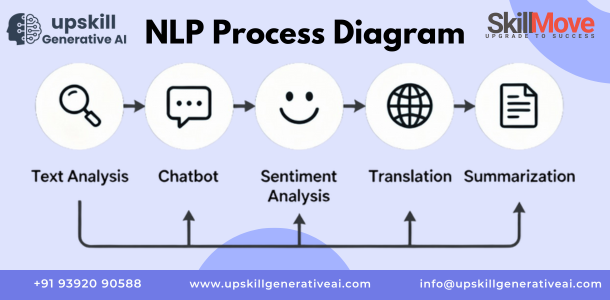
Natural Language Processing (NLP) is the heart of modern Generative AI systems. It enables computers to read, interpret, and produce human-like language — bridging the gap between humans and machines. For IT professionals in 2026, proficiency in NLP is no longer optional; it’s fundamental to driving intelligent automation and conversational AI in every industry.
NLP powers many of the tools we use daily — from chatbots and voice assistants to translation apps and content generation platforms. By learning how to build and fine-tune NLP models, IT professionals can develop systems capable of understanding context, detecting sentiment, and generating personalized responses at scale.
Key skills and concepts to master include:
Tokenization and text preprocessing: Understanding how raw text is broken into meaningful units for machine analysis.
Embedding techniques: Learning how algorithms convert words, phrases, and sentences into numerical representations through models like Word2Vec, BERT, and Transformer-based language models.
Sequence-to-sequence modeling: Implementing algorithms that handle translation, summarization, and contextual response generation.
Prompt engineering: Crafting precise inputs that maximize the performance and accuracy of large language models (LLMs) such as GPT, Claude, and LLaMA.
Fine-tuning and transfer learning: Adapting pre-trained AI models to industry-specific datasets for custom business use cases.
Real-World Applications of NLP in IT
NLP’s influence spans across multiple industries, and mastering it allows IT professionals to implement solutions such as:
Chatbots and virtual agents that enhance customer service with intelligent, context-aware conversations.
Automated documentation and report generation that save hours of manual labor for enterprise teams.
AI-powered sentiment and trend analysis to give businesses actionable insights from social media and customer feedback.
Voice recognition and speech-to-text integration in applications such as digital assistants and accessibility tools.
Multilingual models for global companies targeting cross-regional audiences.
NLP’s Role in Generative AI Career Growth
With the rise of transformer architectures and LLMs, professionals skilled in NLP are now leading innovation in AI-driven automation, customer interaction systems, and digital content generation. For those seeking Generative AI training in Hyderabad, focusing on NLP provides one of the strongest entry points into this field. Training programs in Hyderabad are offering hands-on workshops that teach:
Building and fine-tuning conversational AI models
Integrating NLP into enterprise applications using APIs
Using Generative AI tools like LangChain, OpenAI API, and Hugging Face for production-grade deployments
By mastering NLP, IT professionals don’t just learn how machines understand language—they learn how to make machines communicate intelligently with humans, setting the stage for advanced roles in AI engineering, machine learning development, and data-driven consulting.
Top 5 Generative AI Skills Every IT Professional Must Master
Mastering Machine Learning Techniques for Data Generation
Machine learning is the foundation of every Generative AI system — it enables algorithms to learn patterns from data and generate entirely new outcomes that mimic real-world intelligence. For IT professionals aiming to grow in 2026, mastering these data generation techniques is critical to harnessing the full potential of AI-driven innovation.
Generative AI relies on advanced machine learning methods such as deep learning, neural networks, and reinforcement learning to create synthetic datasets that enhance model training, fill data gaps, and improve accuracy across multiple business use cases. From healthcare imaging and autonomous simulations to intelligent chatbots and predictive analytics, data generation is the secret ingredient driving innovation.
Core Machine Learning Concepts to Focus On
- Supervised and Unsupervised Learning: Understand how algorithms learn from labeled versus unlabeled data. Generative AI specialists must know when to apply clustering, regression, or classification models to produce relevant synthetic outputs.
- Reinforcement Learning with Human Feedback (RLHF): This technique significantly enhances model intelligence by refining outputs based on real-world feedback. RLHF has become the backbone for fine-tuning AI models like GPT and Gemini to align with human preferences.
- Generative Model Architectures: Learn about Generative Adversarial Networks (GANs) and Variational Autoencoders (VAEs)—two key frameworks that enable machines to produce new data resembling original datasets with high fidelity.
- Transformers and Diffusion Models: Modern AI models use transformer architecture for text and sequence-based data, while diffusion models excel in generating high-resolution images and videos. Understanding both opens pathways to multi-modal AI innovation.
Practical Applications for IT Professionals
- Developing synthetic data for AI testing to protect privacy while training robust models in industries like fintech, healthcare, and defense.
- Automating data augmentation and model fine-tuning for AI-driven analytics systems.
- Integrating AI into MLOps workflows to streamline model deployment, versioning, and continuous learning cycles.
- Building predictive and generative systems that produce new insights from historical data, improving decision-making processes for enterprises.
Why Hyderabad Is Emerging as a Machine Learning Hub
With the rapid AI ecosystem growth in India, Hyderabad has positioned itself as a hotspot for AI and machine learning professionals. The city’s booming IT infrastructure, R&D centers, and top-tier AI institutes offer fertile ground for skill development.
Professionals enrolling in Generative AI training in Hyderabad can gain hands-on exposure to real datasets, live projects, and cloud-based lab environments using frameworks like TensorFlow, PyTorch, and Keras. These specialized programs focus on ML model building, tuning, and generative data creation, preparing participants to take on advanced AI roles in enterprises and startups.
Mastering machine learning for data generation is more than a technical necessity — it’s a strategic advantage for any IT professional looking to lead in the Generative AI revolution of 2026.
Top 5 Generative AI Skills Every IT Professional Must Master
Developing Skills in Image and Video Generation Technologies
Generative AI is transforming how visual content is created, edited, and deployed. From AI-generated product designs to automated video production, these technologies are at the forefront of innovation in both creative and enterprise environments. For IT professionals in 2026, mastering image and video generation is no longer optional — it’s a must-have skill that bridges creativity with technical mastery.
AI models like Stable Diffusion, DALL·E 3, and Midjourney are enabling users to convert text prompts into high-quality, photorealistic images within seconds. Meanwhile, tools such as Runway ML, Pika Labs, and Synthesia are redefining how videos are produced — allowing businesses to generate ads, explainer videos, and 3D animations almost instantly.
Professionals who pursue Generative AI training in Hyderabad can gain hands-on experience with these tools while learning the underlying principles that power them.
Key Technical Skills to Develop
- Prompt Engineering for Visuals: Understanding how descriptive and creative prompts influence image quality, style, and composition.
- Diffusion Models and Neural Rendering: Learning the science behind how AI transforms random noise into coherent, visual output through advanced model architecture.
- 3D and Motion Generation: Integrating tools like Sora and Kaiber.AI for generating lifelike moving visuals and cinematic effects.
- API Integration: Embedding image and video generation tools into enterprise platforms for marketing, design, and digital experience workflows.
- Fine-Tuning Custom Models: Training models on specific brand or industry datasets to produce tailor-made visuals that reflect brand identity and tone.
Practical Industry Applications
- Marketing and Advertising: AI-generated visuals for product campaigns, banners, and reels that enhance creative agility.
- E-commerce: Automating product visuals and virtual try-ons using generative tools.
- Education and Training: Producing simulation videos, explainer animations, and virtual labs for immersive learning.
- Healthcare and Engineering: Leveraging visual AI to simulate medical imaging or prototype complex components.
Why It Matters for IT Professionals
By developing expertise in visual generative technologies, IT professionals can bridge the gap between data science and design innovation. These skills not only support creative industries but also improve AI-driven automation, UI/UX development, and visual analytics across sectors.
As Hyderabad emerges as a leading AI hub in India, professionals trained in image and video generation are positioned to lead high-value AI projects for startups, tech firms, and global enterprises. Enrolling in Generative AI training in Hyderabad ensures you gain both conceptual knowledge and hands-on skills to build real-world applications using the latest image and video generation frameworks.
Building Expertise in Generative Code and Automation Tools
Generative code tools are reshaping modern software development, enabling IT professionals to automate repetitive coding tasks, accelerate project delivery, and ensure higher code quality. Platforms like GitHub Copilot, Tabnine, Amazon CodeWhisperer, and IntelliCode now provide context-aware code suggestions, generate entire functions, refactor code, write unit tests automatically, and even build documentation in real time.
Essential Skills for IT Professionals
- Prompt engineering for coding: Knowing how to frame natural language requests, debug issues via instructions, and leverage AI assistants for multiple coding languages is crucial.
- Integrating AI assistants: Skills in integrating tools like Copilot with VS Code, JetBrains, or cloud environments are increasingly demanded.
- Automating testing and documentation: Using generative AI to automatically create unit tests, generate documentation, and handle code reviews improves accuracy and reduces manual workloads.
- Repository grounding and customization: Customizing AI models for proprietary codebases ensures recommendations are relevant and context-aware for team workflows.
Productivity and Enterprise Impact
- Accelerates coding velocity: Over 80% of developers now adopt AI assistants to boost speed and reduce development cycles.
- Enhances team collaboration: Generative code tools improve communication during brainstorming and solution prototyping, leading to faster consensus and more innovative outcomes.
- Improves code quality and compliance: With enterprise-grade AI tools like Codacy and DeepCode, organizations can enforce coding standards, identify vulnerabilities, and achieve better governance.
- Automates DevOps integration: Automation extends beyond code writing; AI is now used in CI/CD pipelines, monitoring, and deployment tasks.
Top Tools for Coding Automation in 2026
Tool Name | Features | Suitable For |
GitHub Copilot | Code completion, explanations, unit testing | All levels, enterprise |
Tabnine | Fast code suggestions, multi-language | Professional developers |
Amazon CodeWhisperer | Cloud integration, security-focused | Cloud-native teams |
Copilot X | Multi-file edits, code reviews, pull requests | Large-scale collaboration |
PearAI | Inline suggestions, open-source enhancements | Custom workflow teams |
Codeium | Chat, autocomplete, supports 21+ editors | Diverse developer teams |
All these advancements make generative code and automation foundational skills for IT professionals attending Generative AI training in Hyderabad, preparing them for a future where development is faster, smarter, and more collaborative.
Ethics and Best Practices in Implementing Generative AI Solutions
As Generative AI becomes integral to industries worldwide, the responsibility to deploy it ethically is more critical than ever. Every IT professional must understand that powerful AI systems can drive innovation — but if mismanaged, they can also amplify bias, misinformation, and security vulnerabilities.
Whether used for automating workflows, creating digital content, or supporting business intelligence, ethical frameworks ensure that AI operates transparently and fairly. Professionals enrolling in Generative AI training in Hyderabad are now trained not only on technical skills but also on the moral, social, and regulatory dimensions of AI adoption.
Key Ethical Challenges in Generative AI
- Bias and Fairness: Models can unintentionally reproduce biases present in their training data. Professionals must learn to identify and mitigate these biases using fairness metrics, diverse datasets, and inclusive model validation techniques.
- Transparency and Explainability: Many generative models, especially deep neural networks, function as “black boxes.” Understanding explainable AI (XAI) approaches helps developers clarify how decisions or outputs are produced.
- Data Privacy and Consent: Using personal or proprietary data without proper governance can lead to legal and ethical violations. Ensuring compliance with data protection laws such as GDPR, DPDP Act (India), and industry standards is non-negotiable.
- Misinformation and Deepfakes: The creation of synthetic images, videos, and text can easily be misused. Learning watermarking, content provenance, and verification tools is essential to combat misuse.
Best Practices for Responsible AI Implementation
- Adopt Ethical AI Frameworks: Follow structured frameworks such as Microsoft’s Responsible AI Principles or Google’s AI Ethics Guidelines to align technology use with human values.
- Implement AI Governance Policies: Establish internal committees or protocols to monitor data use, model lifecycle, and post-deployment impacts.
- Ensure Human Oversight: Maintain a “human-in-the-loop” approach, especially in decision-critical AI applications.
- Perform Continuous Auditing and Monitoring: Regular audits of model behavior and retraining with updated datasets prevent model drift and unethical outcomes.
- Educate and Upskill Teams: A strong ethical foundation begins with awareness. Globally recognized Generative AI training programs in Hyderabad now include dedicated modules on responsible AI design, governance, and compliance.
The Future of Ethical AI in IT
As AI systems become more autonomous, global standards are being developed to ensure safety, transparency, and accountability. IT professionals in India who understand both the technical and ethical aspects of Generative AI will be best suited for leadership roles in governance-driven companies, research labs, and enterprise-level projects.
By mastering ethical AI, professionals not only future-proof their careers but also contribute responsibly to the technological landscape shaping society.
More Articles Like This
Frequently Asked Questions (FAQs)
How does prompt engineering improve generative AI outcomes?
Writing precise instructions (prompts) helps AI generate more accurate, useful results.
Which programming languages are most important for mastering generative AI?
Python is most common, but SQL and cloud scripting are also useful.
What is the role of large language models (LLMs) in generative AI today?
LLMs power chatbots, content creation tools, and code generators by understanding and creating language.
How can IT professionals get hands-on experience with generative AI models?
Practice with open-source tools, join AI projects, and take online courses for hands-on learning.
What are Retrieval Augmented Generation (RAG) methods in AI?
RAG combines database search with generative AI, making answers more reliable.
How does generative AI impact the automation of creative tasks?
Generative AI can write text, create art, code, or music, saving time and boosting creativity.
What frameworks and platforms should one learn for generative AI development?
TensorFlow, PyTorch, and cloud platforms like AWS, Google Cloud, and Azure.
Are prompt engineering and prompt design different? If so, how?
Prompt design is about planning prompts; prompt engineering is about testing and refining them for best results.
How do you fine-tune generative AI models for specific domains or applications?
Train the model using data from your field to improve its relevance and accuracy.
What real-world applications are powered by generative AI?
Chatbots, automated content creation, personalized product recommendations, and image editing.
Which ethical skills are essential for AI professionals working with generative models?
Understanding bias, data privacy, fairness, and responsible usage.
How do IT professionals address biases in generative AI systems?
Check model outputs regularly and adjust training data to reduce unfair or incorrect results.
What challenges do enterprises face when deploying generative AI solutions?
Issues include data quality, ethical risks, security, and integration with existing systems.
How do generative adversarial networks (GANs) differ from other generative models?
GANs use two models (generator and discriminator) to create more realistic content.
What are some key interview questions for generative AI engineer roles in 2026?
Topics include prompt engineering, ethical concerns, coding skills, and model fine-tuning.
How do machine learning fundamentals enable success in generative AI?
Basics like supervised and unsupervised learning help interpret AI results and build better applications.
What career opportunities exist for generative AI specialists in 2026?
Engineer, data scientist, prompt designer, AI ethicist, and product manager roles are in high demand.
How do IT professionals ensure responsible use of generative AI at work?
Follow ethical guidelines, monitor outputs for bias, and protect user privacy.
Can non-technical roles like product manager or ethicist benefit from generative AI skills?
Yes, understanding AI helps in project management, communication, and ensuring the technology is used responsibly.
Can non-technical roles like product manager or ethicist benefit from generative AI skills?
Yes, understanding AI helps in project management, communication, and ensuring the technology is used responsibly.